What is an arteriovenous malformation?
An arteriovenous malformation (AVM) is a condition where a group of tangled, abnormal blood vessels affect how blood flows between your arteries and veins. AVMs are most commonly found in the brain and spinal cord, but can also occur in other parts of the body.
Normally, arteries carry oxygen-rich blood from the heart to the body's tissues, and veins return the blood back to the heart and lungs. Tiny blood vessels called capillaries help with this process by slowing blood flow and allowing oxygen to reach nearby tissues. But in an AVM, the capillaries are missing, so blood moves too quickly from arteries to veins without delivering oxygen where it's needed. This can lead to tissue damage and, over time, may cause the AVM to grow larger.
Many people with an AVM in the brain or spinal cord don’t have noticeable symptoms. However, in some cases, the abnormal blood vessels can weaken and rupture, causing bleeding in the brain (a hemorrhage), which can lead to a stroke or other serious complications. AVMs are often found by chance during tests for other health conditions.

Arteriovenous malformation symptoms
AVM symptoms can develop at any age, but they are most often noticed in a person’s 20s or later. Because AVMs cause gradual damage over time, symptoms tend to appear as people get older. If no symptoms have developed by the late 40s or early 50s, the AVM is usually stable and less likely to cause problems. In some cases, pregnancy can trigger new or worsening symptoms due to increased blood volume and blood pressure.
The first signs of an arteriovenous malformation often show up after bleeding occurs. Along with bleeding, symptoms may include:
- Difficulty thinking or concentrating, which can get worse over time
- Dolores de cabeza
- Feeling nauseous or vomiting
- Convulsiones
- Desmayo
Other symptoms that may happen include:
- Weakness in the muscles, especially in the legs
- Paralysis, or the loss of movement and feeling in one part of the body
- Trouble with coordination, which can make walking difficult
- Difficulty with tasks that need planning or organization
- Dolor de espalda
- Dizziness or feeling off balance
- Vision problems, like losing part of your sight, trouble moving your eyes or swelling in the optic nerve
- Difficulty speaking or understanding language (aphasia)
- Numbness, tingling or sudden pain
- Memory problems or confusion
- Seeing or hearing things that aren't there (hallucinations)
Cuando consultar con su médico
If you experience any severe symptoms or if they come on suddenly, don't wait—call 911 or go to the emergency room right away. Symptoms like an intense headache, suddenly passing out or losing the ability to move can be signs of a serious problem, like bleeding in the brain, which could be caused by an AVM or other conditions.
Even if you do not have these symptoms, it's a good idea to talk to your healthcare provider if you have risk factors for AVMs or if there's a history of neurological conditions in your family. Catching an AVM early and staying on top of your health can help prevent complications and guide the right treatment.
Arteriovenous malformation causes
The exact cause of AVMs is not fully understood. Most of the time, AVMs are congenital, meaning a person is born with them, but they can also develop shortly after birth or later in life. While AVMs can sometimes run in families, it's more common for other inherited conditions to increase the risk of developing an AVM.
Complications of AVMs
AVMs can lead to a range of complications, some of which can be life-threatening. These include:
- Bleeding: The biggest danger is when an AVM ruptures and causes bleeding in the brain. If an AVM in the brain ruptures, the bleeding can cause sudden neurological problems, such as weakness, numbness, trouble speaking or vision loss. Depending on the size and location of the bleed, it may cause permanent brain injury or, in severe cases, be life-threatening.
- Carrera: Even without rupture, AVMs can reduce or block normal blood flow to brain tissue. This can deprive part of the brain of oxygen, causing symptoms of stroke, such as difficulty with movement, speech or thinking.
- Aneurysm: A bulge in the wall of a weakened blood vessel, which can increase the risk of a dangerous rupture.
- Seizures: AVMs can irritate nearby brain tissue, leading to seizures. These seizures are caused by abnormal electrical activity in the brain that disrupts communication between brain cells and can range from brief staring spells to convulsions.
- Progressive neurological problems: In some cases, AVMs cause long-term pressure or damage to the brain without rupturing. This may lead to chronic headaches, difficulty with memory or concentration and gradual loss of strength, sensation or coordination.
How to diagnose arteriovenous malformation
Your doctor may use several methods to diagnose an AVM, beginning with a review of your medical history and a physical exam. To confirm the diagnosis, your doctor may recommend imaging tests that can provide clear images of your blood vessels, organs, tissues and any signs of vascular issues or bleeding.
Historial médico y examen
Your doctor will start by asking about your medical history, especially any inherited conditions that could raise your risk of an AVM. They’ll also want to know about the symptoms you’ve experienced—when they started, how often they occurred and how they felt.
During the physical exam, your doctor will check your overall health. They may use a stethoscope to listen for a sound in your blood vessels called a "bruit." A bruit is a whooshing sound that can occur when blood flows through arteries and veins more quickly than usual, which may happen in people with an AVM.
Pruebas de imagen
Several imaging tests can help your doctor understand the structure and function of your blood vessels and confirm the presence of an AVM. These tests include:
- Cerebral angiography: This X-ray-based test involves injecting a contrast agent (dye) into an artery, which allows your blood vessels to show up clearly in the images. It provides detailed pictures of the AVM.
- Computed tomography (CT) scan: A CT scan uses X-rays to create 3D images and can help detect a brain or spinal cord bleed.
- Magnetic resonance imaging (MRI) scan: An MRI creates detailed images of the blood vessel defect and the surrounding organs and tissues.
- Magnetic resonance angiography (MRA) scan: This type of MRI focuses on blood flow and can show how well blood is moving through a vascular defect. A contrast dye may be used, but it’s not always necessary.
- Transcranial Doppler ultrasound: This test sends sound waves through your skull to produce images of the arteries. Doctors can use these images to identify blood vessel defects.
Arteriovenous malformation treatment
Your doctor will develop a personalized treatment plan based on factors that are unique to you, including the type of AVM you have, the risk of it rupturing, the severity of your symptoms, your age, and your overall health. Treatment options may include medications to help manage symptoms or a procedure to remove or shrink the tangle of blood vessels.
The main goal of treatment is to prevent a rupture or eliminate the AVM entirely. Early treatment can help protect you from serious complications. Some people may only need occasional imaging tests to monitor the AVM and adjust medications as needed. Not everyone with an AVM needs surgery, and in some cases, surgery may be riskier than leaving the AVM in place.
Medicación
While medications can't remove an AVM, they can help you manage symptoms and improve your quality of life. Your doctor may prescribe medications such as:
- Anti-seizure medications: These are for people who experience seizures, which can be a common symptom of AVMs. By controlling seizures, these medications help ensure your safety and allow you to continue participating in daily activities.
- Blood pressure medications: High blood pressure can increase the risk of an AVM rupturing. Medications that lower blood pressure can help reduce this risk, supporting better vascular health and preventing complications.
- Pain relievers: If you experience pain due to the AVM, such as headaches or discomfort, your doctor may recommend over-the-counter or prescription pain medications to provide relief and improve your overall comfort.
Surgery
Your doctor may recommend surgery if the AVM is growing, at risk of rupturing, or in a position where it would be easy to remove without significant risk of complications. Surgical options include:

- AVM resection: This procedure involves removing the AVM through a small incision. To prevent bleeding during the procedure, nearby blood vessels are closed off. Once the AVM is removed, the surgeon reroutes blood flow through healthy arteries and veins. This approach can be highly effective for AVMs that are easily accessible and not too deeply embedded in the brain or spinal cord.
- Embolization: A surgeon will inject coils or a glue-like substance into the AVM. This material blocks blood flow to the group of tangled blood vessels, which causes the AVM to shrink over time. This approach is often used in combination with surgery to shrink the AVM before removal, making the surgery less complicated and safer.
- Radiosurgery: This treatment is often used for small AVMs that are hard to reach with traditional surgery. It uses focused radiation beams to precisely target the AVM. The radiation damages the blood vessels in the AVM, causing them to shrink and eventually close off. This process happens gradually, with the AVM shrinking over a period of months or even years. Since it’s noninvasive, radiosurgery can be an effective option for treating AVMs that are difficult to remove through surgery.
Find specialized AVM care near you
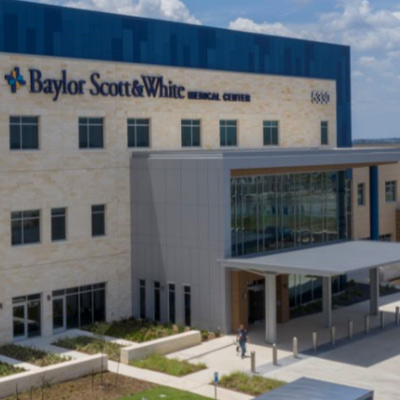
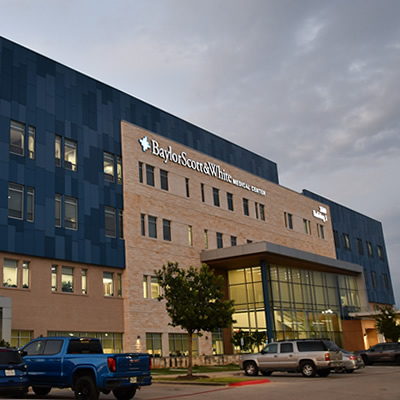
At Baylor Scott & White, we offer specialized care and treatment for arteriovenous malformations at multiple locations across North and Central Texas. With our expert neurology centers, you can receive care from a team dedicated to your health and well-being. Whether you're seeking diagnosis, treatment or ongoing management, we are here to provide the support you need.
Clínica Baylor Scott & White - Centro Médico Buda
5330 Paso elevado Rd Ste 100, Buda, TX, 78610
- Lunes: 8:00 am - 5:00 pm
- Martes: 8:00 am - 5:00 pm
- Miércoles: 8:00 am - 5:00 pm
- Jueves: 8:00 am - 5:00 pm
- Viernes: 8:00 am - 5:00 pm
Clínica de Baylor Scott & White - Lakeway
200 Medical Pkwy, Lakeway, Texas, 78738
- Lunes: 8:00 am - 5:00 pm
- Martes: 8:00 am - 5:00 pm
- Miércoles: 8:00 am - 5:00 pm
- Jueves: 8:00 am - 5:00 pm
- Viernes: 8:00 am - 5:00 pm
Baylor Scott & Centro Médico Blanco - Lakeway
100 Medical Pkwy, Lakeway, Texas, 78738
Instituto Baylor Scott & White de Rehabilitación - Lakeway
2000 Medical Dr , Lakeway, TX, 78734
Baylor Scott & White Medical Center - Caídas de mármol
810 W State Hwy 71 Marble Falls, TX, 78654
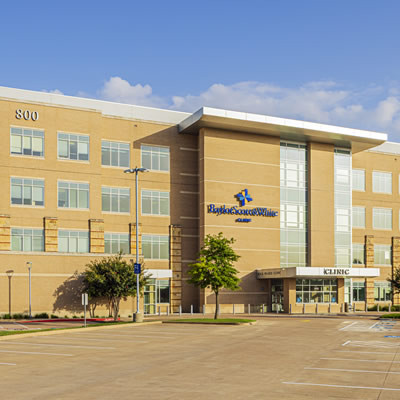
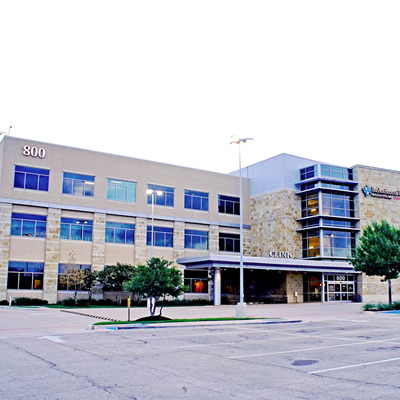
Clínica de Baylor Scott & White - Marble Falls
800 W State Hwy 71 Marble Falls, TX, 78654
- Lunes: 8:00 am - 5:30 pm
- Martes: 8:00 am - 5:30 pm
- Miércoles: 8:00 am - 5:30 pm
- Jueves: 8:00 am - 5:30 pm
- Viernes: 8:00 am - 5:30 pm
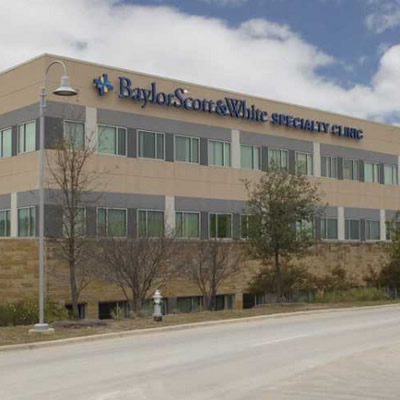
Clínica de especialidades Baylor Scott & White - Horseshoe Bay
201 Bay West Blvd., Horseshoe Bay, Texas, 78657
- Lunes: 8:00 am - 5:00 pm
- Martes: 8:00 am - 5:00 pm
- Miércoles: 8:00 am - 5:00 pm
- Jueves: 8:00 am - 5:00 pm
- Viernes: 8:00 am - 5:00 pm
Baylor Scott & Clínica Blanca - Austin River Place
10815 Ranch Rd 2222, Austin, TX, 78730
- Lunes: 8:00 am - 5:00 pm
- Martes: 8:00 am - 5:00 pm
- Miércoles: 8:00 am - 5:00 pm
- Jueves: 8:00 am - 5:00 pm
- Viernes: 8:00 am - 5:00 pm
Clínica Baylor Scott & White - Centro Médico de Pflugerville (Edificio 1)
2600 E Pflugerville Pkwy Edificio 1, Oficina 200, Pflugerville, TX, 78660
- Lunes: 8:00 am - 5:00 pm
- Martes: 8:00 am - 5:00 pm
- Miércoles: 8:00 am - 5:00 pm
- Jueves: 8:00 am - 5:00 pm
- Viernes: 8:00 am - 5:00 pm
- Lunes: 7:30 am - 4:00 pm
- Martes: 7:30 am - 4:00 pm
- Miércoles: 7:30 am - 4:00 pm
- Jueves: 7:30 am - 4:00 pm
- Viernes: 7:30 am - 4:00 pm
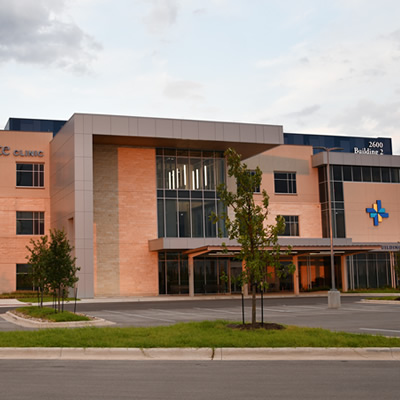
Clínica Baylor Scott & White - Edificio del Centro Médico de Pflugerville 2
2600 E Pflugerville Pkwy Edificio 2, Pflugerville, TX, 78660
- Lunes: 8:00 am - 5:00 pm
- Martes: 8:00 am - 5:00 pm
- Miércoles: 8:00 am - 5:00 pm
- Jueves: 8:00 am - 5:00 pm
- Viernes: 8:00 am - 5:00 pm
- Lunes: 8:00 am - 4:00 pm
- Martes: 8:00 am - 4:00 pm
- Miércoles: 8:00 am - 4:00 pm
- Jueves: 8:00 am - 4:00 pm
- Viernes: 8:00 am - 4:00 pm
Baylor Scott & Centro Médico Blanco - Round Rock
300 University Blvd., Round Rock, Texas, 78665
Baylor Scott & Clínica Blanca - Round Rock 300 Universidad
300A University Blvd, Round Rock, Texas, 78665
- Lunes: 8:00 am - 5:00 pm
- Martes: 8:00 am - 5:00 pm
- Miércoles: 8:00 am - 5:00 pm
- Jueves: 8:00 am - 5:00 pm
- Viernes: 8:00 am - 5:00 pm
Baylor Scott & Centro Médico Blanco - Taylor
305 Mallard Ln, Taylor, Texas, 76574
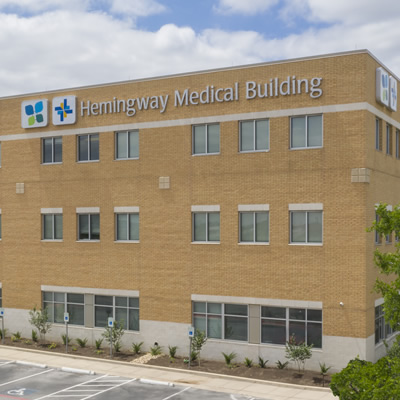
Clínica de especialidades Baylor Scott & White - Killeen Hemingway
2405 S Clear Creek Rd, Killeen, TX, 76549
- Lunes: 8:00 am - 5:00 pm
- Martes: 8:00 am - 5:00 pm
- Miércoles: 8:00 am - 5:00 pm
- Jueves: 8:00 am - 5:00 pm
- Viernes: 8:00 am - 5:00 pm
Baylor Scott & White McLane Children's Medical Center - Templo
1901 SW HK Dodgen Loop, Temple, TX, 76502
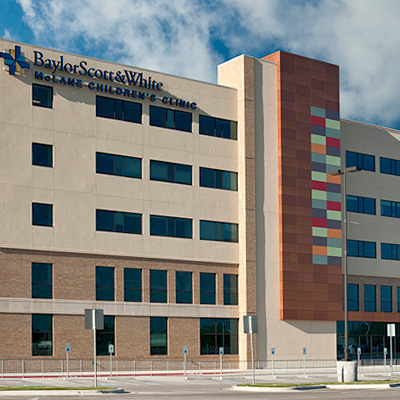
Clínica de especialidades para niños Baylor Scott & White McLane - Temple
1901 SW HK Dodgen Loop, Temple, TX, 76502
Clínica Baylor Scott & White - Templo
2401 S 31st St, Temple, TX, 76508
- Lunes: 8:00 am - 5:00 pm
- Martes: 8:00 am - 5:00 pm
- Miércoles: 8:00 am - 5:00 pm
- Jueves: 8:00 am - 5:00 pm
- Viernes: 8:00 am - 5:00 pm
Baylor Scott & White Medical Center - Templo
2401 S 31st St, Temple, TX, 76508
Baylor Scott & White Medical Center - Brenham
700 Medical Pkwy, Brenham, Texas, 77833
Centro Médico Baylor Scott & White - College Station
700 Dr. Scott y White, College Station, Texas, 77845
Baylor Scott & White Clinic - College Station Rock Prairie
800 Dr. Scott y White, College Station, Texas, 77845
- Lunes: 7:30 am - 5:00 pm
- Martes: 7:30 am - 5:00 pm
- Miércoles: 7:30 am - 5:00 pm
- Jueves: 7:30 am - 5:00 pm
- Viernes: 7:30 am - 5:00 pm
Baylor Scott & Centro Médico Blanco - Hillcrest
100 Hillcrest Medical Blvd, Waco, Texas, 76712
Clínica de Neurociencias Baylor Scott & White - Waco
50 Hillcrest Medical Blvd Ste 201-A, Waco, TX, 76712
- Lunes: 8:00 am - 5:00 pm
- Martes: 8:00 am - 5:00 pm
- Miércoles: 8:00 am - 5:00 pm
- Jueves: 8:00 am - 5:00 pm
- Viernes: 8:00 am - 5:00 pm
Baylor Scott & White Medical Center - Waxahachie
2400 Interestatal norte 35E , Waxahachie, TX, 75165
Instituto de rehabilitación Baylor Scott & White - Fort Worth
6601 Harris Pkwy, Fort Worth, Texas, 76132
Baylor Scott & White Centro Médico All Saints - Fort Worth
1400 8th Avenue, Fort Worth, Texas, 76104
Baylor Scott & White Medical Center - Irving
1901 N. MacArthur Blvd., Irving, Texas, 75061
Baylor Scott & White Neurología - Irving
2021N MacArthur Blvd Ste 210, Irving, TX, 75061
- Lunes: 8:00 am - 4:30 pm
- Martes: 8:00 am - 4:30 pm
- Miércoles: 8:00 am - 4:30 pm
- Jueves: 8:00 am - 4:30 pm
- Viernes: 8:00 am - 1:00 pm
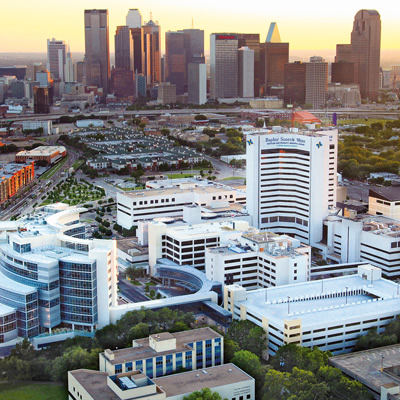
Baylor University Medical Center, parte de Baylor Scott & White Health
3500 Avenida Gastón, Dallas, TX, 75246
Baylor Scott & White Neurología - Dallas
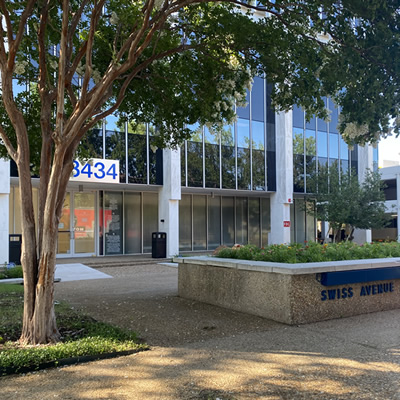
3434 Swiss Ave Ste 400 Dallas, TX, 75204
- Lunes: 8:00 am - 4:30 pm
- Martes: 8:00 am - 4:30 pm
- Miércoles: 8:00 am - 4:30 pm
- Jueves: 8:00 am - 4:30 pm
- Viernes: 8:00 am - 2:00 pm
Baylor Scott & White Institute for Rehabilitation - Dallas
909 N Washington Ave , Dallas, TX, 75246
Baylor Scott & White Medical Center - Grapevine
1650 West College St, Grapevine, Texas, 76051
Centro Médico Baylor Scott & White - Sunnyvale
231 S Collins Rd, Sunnyvale, Texas, 75182
Baylor Scott & White Asociados de Neurología Cognitiva y Conductual
9101N Central Expy Ste 230, Dallas, TX, 75231
- Lunes: 8:00 am - 4:30 pm
- Martes: 8:00 am - 4:30 pm
- Miércoles: 8:00 am - 4:30 pm
- Jueves: 8:00 am - 4:30 pm
- Viernes: 8:00 am - 4:30 pm
Baylor Scott & White Especialistas en medicina del dolor de cabeza del norte de Texas - Dallas
9101N Central Expy Ste 400, Dallas, TX, 75231
- Lunes: 8:00 am - 4:30 pm
- Martes: 8:00 am - 4:30 pm
- Miércoles: 8:00 am - 4:30 pm
- Jueves: 8:00 am - 4:30 pm
- Viernes: 8:00 am - 4:30 pm
The Headache Center at Baylor University Medical Center
9101N Central Expy Ste 400, Dallas, TX, 75231
Baylor Scott & White Neuroscience Center
9101N Central Expy Ste 400, Dallas, TX, 75231
Baylor Scott & White Neurología - Lake Pointe
7600 vista al lago pkwy ste 150, rowlett, tx, 75088
- Lunes: 8:00 am - 4:00 pm
- Martes: 8:00 am - 4:00 pm
- Miércoles: 8:00 am - 4:00 pm
- Jueves: 8:00 am - 4:00 pm
- Viernes: 8:00 am - 4:00 pm
Baylor Scott & White Medical Center - Plano
4700 Alliance Blvd., Plano, TX, 75093
Baylor Scott & White Neurology Hospitalist Group - Plano
4700 Alliance Blvd., Plano, TX, 75093
Asociación de Diagnóstico Baylor Scott & White Dallas - Plano
4716 Pabellón II de Alliance Blvd, Plano, TX, 75093
- Lunes: 7:00 am - 5:00 pm
- Martes: 7:00 am - 5:00 pm
- Miércoles: 7:00 am - 5:00 pm
- Jueves: 7:00 am - 5:00 pm
- Viernes: 7:00 am - 5:00 pm
- Sábado: 8:00 am - 12:00 pm
Baylor Scott & White Neurología - Plano
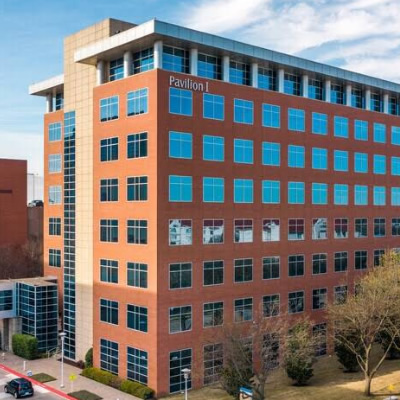
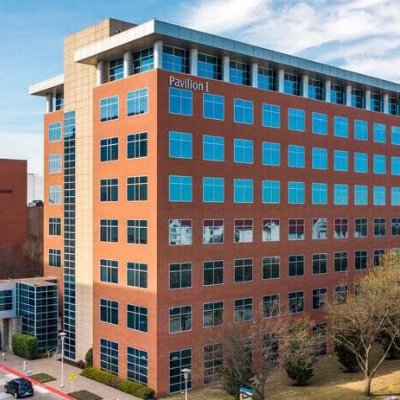
4708 Pabellón I de Alliance Blvd, Ste 550, Plano, TX, 75093
- Lunes: 8:00 am - 5:00 pm
- Martes: 8:00 am - 5:00 pm
- Miércoles: 8:00 am - 5:00 pm
- Jueves: 8:00 am - 5:00 pm
- Viernes: 8:00 am - 4:30 pm
Baylor Scott & White - Centro para el cerebro y la columna vertebral de Plano
4708 Pabellón I de Alliance Blvd, Ste 810, Plano, TX, 75093
Baylor Scott & White Medical Center - Lake Pointe
6800 Scenic Dr, Rowlett, Texas, 75088
Asociación de diagnóstico de Baylor Scott y White Dallas - Garland
7217 telecom pkwy ste 300, guirnalda, tx, 75044
- Lunes: 8:00 am - 4:30 pm
- Martes: 8:00 am - 4:30 pm
- Miércoles: 8:00 am - 4:30 pm
- Jueves: 8:00 am - 4:30 pm
- Viernes: 8:00 am - 4:30 pm
- Lunes: 8:00 am - 4:15 pm
- Martes: 8:00 am - 4:15 pm
- Miércoles: 8:00 am - 4:15 pm
- Jueves: 8:00 am - 4:15 pm
- Viernes: 8:00 am - 4:15 pm
Baylor Scott & White Orthopaedic Associates de Dallas - Programa de conmoción cerebral deportiva en The Star
3800 Gaylord Pkwy Ste 810, Frisco, Texas, 75034
- Lunes: 8:00 am - 5:00 pm
- Martes: 8:00 am - 5:00 pm
- Miércoles: 8:00 am - 5:00 pm
- Jueves: 8:00 am - 5:00 pm
- Viernes: 8:00 am - 5:00 pm
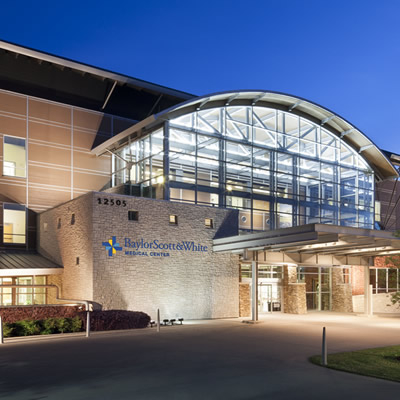
Baylor Scott & White Medical Center - Centenario
12505 Líbano Rd, Frisco, TX, 75035
Baylor Scott & White Medical Center - Frisco en PGA Parkway
7600 Mejor Camino, Frisco, TX, 75033
Baylor Scott & White Medical Center - McKinney
5252 Autopista W University Dr 380 en Lake Forest Drive, McKinney, TX, 75071
Baylor Scott & White Neurología - McKinney
5236 w university dr ste 3700, mckinney, tx, 75071
- Lunes: 8:00 am - 5:00 pm
- Martes: 8:00 am - 5:00 pm
- Miércoles: 8:00 am - 5:00 pm
- Jueves: 8:00 am - 5:00 pm
- Viernes: 8:00 am - 5:00 pm
Preguntas frecuentes
-
Is arteriovenous malformation hereditary?
Arteriovenous malformations (AVMs) are usually present at birth, but they aren't typically passed down through families. While AVMs themselves aren't hereditary, certain genetic conditions can make it more likely for someone to develop an AVM. If there’s a family history of these conditions, you might be at a higher risk.
-
Is arteriovenous malformation curable?
Yes, AVMs can often be treated successfully. Treatment options include surgery, embolization (for AVMs that are hard to reach), and radiosurgery (for larger AVMs). The right option depends on the AVM’s size and location. Some people may need follow-up treatments or regular check-ups to ensure the best results.
-
Can arteriovenous malformation cause stroke?
Yes, arteriovenous malformations (AVMs) can cause strokes. If an AVM ruptures, it can lead to bleeding in the brain (hemorrhagic stroke). AVMs can also block blood flow, causing a stroke from lack of oxygen (ischemic stroke). The risk depends on factors like size, location and age.